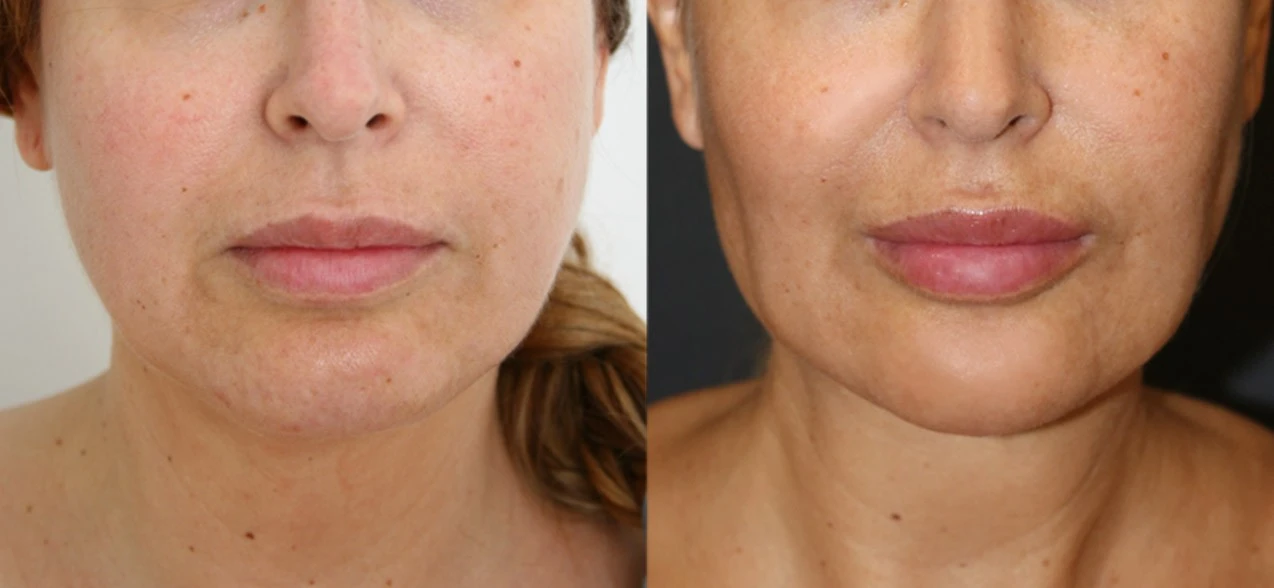
About the treatment
What is buccal fat removal?
Deep in the cheek, below the cheekbone and behind the facial muscles, there is a small fat pad on each side: Bichat's fat pad, in English the buccal fat pad. It is different from the ordinary fat under the skin. In some people the fat pads are naturally large, often hereditary, so the face looks round even though they are otherwise slim. The fat pad is only slightly affected by dieting and exercise.
In buccal fat removal, the surgeon makes a small incision inside the mouth on the inside of the cheek and removes part of the fat pad. The whole fat pad is never removed, because that can give a hollow look. In Danish the procedure is called fjernelse af kindfedt, and it is also known as bichectomy or buccal lipectomy.
The fat pad naturally becomes smaller with age. This is one of the reasons why the procedure should be considered carefully, and why we recommend that you talk to us and the surgeon before you decide.
Cheek fat or something else?
Round cheeks are not always caused by the fat pad. It can also be ordinary fat under the skin, strong chewing muscles or the bone structure of the face. From your photos and at the consultation, the surgeon assesses what makes your cheeks round and whether buccal fat removal can help.
Where is the scar?
The incision is small and sits inside the mouth on the inside of the cheek, so there are usually no visible scars. It is closed with dissolvable stitches. At the consultation, the surgeon tells you how the procedure is done in your case.
Buccal fat removal does not change the skin. If the skin is loose, or the face has lost fullness with age, other treatments are often more relevant.
What buccal fat removal can do
- Make the cheeks slimmer
- Give the face a more defined shape below the cheekbones
- Reduce a round look caused by large fat pads
What the procedure does not change
- Loose skin; here a facelift may be relevant
- Fat elsewhere in the face, for example under the chin
- Strong chewing muscles or the bone structure
- The fact that the face changes with age